
 Language
Service and Technology
Service and Technology
Understanding Piezoresistive Sensors: Principles, Characteristics, and Applications
Category:
Relevant sensor technology papers
Publish Time:
2020-07-08
A piezoresistive sensor is a device made by diffusing resistors onto a semiconductor substrate based on the piezoresistive effect of the semiconductor material. The substrate can directly serve as the sensing element, with the diffused resistors connected in a bridge configuration within the substrate.
Principle of Piezoresistive Sensors
A piezoresistive transducer utilizes the piezoresistive effect of monocrystalline silicon and integrated circuit technology. When force is applied to the monocrystalline silicon material, its resistivity changes. The change in electrical signal, proportional to the force, is measured by the circuit. Piezoresistive sensors are used for measuring and controlling pressure, tension, pressure difference, and other physical quantities that can be converted into force changes (such as liquid level, acceleration, weight, strain, flow rate, and vacuum).
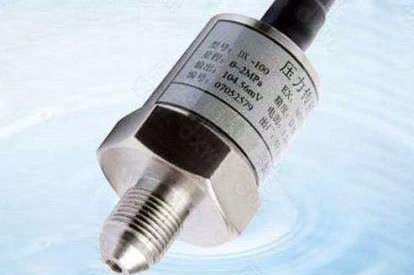
Piezoresistive sensors are devices made by diffusing resistors onto a semiconductor substrate based on the piezoresistive effect of the semiconductor material. The substrate can directly serve as the sensing element, with the diffused resistors connected in a bridge configuration within the substrate. When the substrate is subjected to external force and deformation, the resistance values change, resulting in a corresponding unbalanced output from the bridge. The substrate (or diaphragm) materials used for piezoresistive sensors are mainly silicon wafers and germanium wafers. Silicon wafer-based piezoresistive sensors, especially those used for measuring pressure and speed, are becoming increasingly popular and widely used.
Applications of Piezoresistive Sensors
Piezoresistive sensors are widely used in aerospace, aviation, marine, petrochemical, power machinery, biomedical engineering, meteorology, geology, and seismology. In aerospace and aviation industries, pressure is a key parameter, and high precision is required for measuring static and dynamic pressure, local pressure, and the entire pressure field. Piezoresistive sensors are ideal for this purpose. For example, they are used to measure airflow pressure distribution on helicopter wings, test dynamic distortion of engine inlets, pulsating pressure of cascades, and wing flutter. In the measurement of central pressure in aircraft jet engines, specially designed silicon pressure sensors are used, with operating temperatures exceeding 500℃. The atmospheric data measurement system in Boeing airliners uses matching silicon pressure sensors with an accuracy of up to 0.05%.
With a single sensor diameter of only 2.36 mm, a natural frequency as high as 300 kHz, and nonlinearity and hysteresis both at ±0.22% of the full scale. In biomedicine, piezoresistive sensors are also ideal detection tools. Diffusion silicon membranes as thin as 10 micrometers and with an outer diameter of only 0.5 mm have been produced for injection needle-type piezoresistive pressure sensors and sensors that can measure cardiovascular, intracranial, urethral, uterine, and intraocular pressure. Figure 3 shows the structure of a sensor used to measure brain pressure. Piezoresistive sensors are also effectively used in the measurement of explosion pressure and shock waves, vacuum measurement, monitoring and control of automobile engine performance, and military applications such as measuring gun barrel pressure and launch shock waves. In addition, piezoresistive sensors are widely used in oil well pressure measurement, while-drilling directional and positional measurement, detection of underground sealed cable fault points, and flow rate and liquid level measurement. With the further development of microelectronics technology and computers, the application of piezoresistive sensors will continue to develop rapidly.
Typical Characteristics of Piezoresistive Sensors
①The sensitivity coefficient of piezoresistive sensors is 50-100 times greater than that of metal strain-type pressure sensors. Sometimes, the output of piezoresistive sensors can be measured directly without an amplifier.
②Because it uses integrated circuit processing technology, it has a small structure size and light weight.
③High pressure resolution; it can detect micro-pressures as small as blood pressure.
④Good frequency response; it can measure pulsating pressure of tens of kilohertz.
⑤Since the force-sensitive element and detection element are fabricated on the same silicon wafer, it is reliable, has high overall accuracy, and has a long service life.
⑥Because it is made of semiconductor material silicon, the sensor is relatively sensitive to temperature. If temperature compensation is not used, the temperature error will be large.
Why Do Piezoresistive Sensors Produce Temperature Errors? How to Compensate?
There are two types of piezoresistive sensors: one type uses the bulk resistance of semiconductor materials to make adhesive strain gauges, forming semiconductor strain sensors; the other type uses integrated circuit technology to make diffused resistors on a semiconductor substrate to form sensitive elements, called diffused piezoresistive sensors.
Piezoresistive sensors are greatly affected by temperature, resulting in zero drift and sensitivity drift, thus causing temperature errors.
In piezoresistive sensors, the temperature coefficient of the diffused resistor is large, and the resistance value changes with temperature, causing zero drift of the sensor.
The temperature drift of sensor sensitivity is caused by the change of piezoresistive coefficient with temperature. When the temperature rises, the piezoresistive coefficient decreases, and the sensor sensitivity decreases; conversely, the sensitivity increases.
Zero-point temperature drift can generally be compensated by using series and parallel resistors.
Sensitivity temperature drift is compensated by connecting a diode in series in the power supply circuit of the bridge.
In addition, piezoresistive sensors can also connect four diffused resistors into a full bridge. To reduce the influence of temperature, a constant current source can be used for power supply.
It can be seen that the bridge output is proportional to the resistance change, that is, proportional to the measured value, and also proportional to the power supply current. The output voltage is related to the magnitude and accuracy of the constant current source current, but not to the temperature, so the constant current source has a good temperature compensation effect.
Disclaimer: This article is reproduced for the purpose of disseminating more information. If there are any errors in the source annotation or infringement of your legitimate rights and interests, please contact us, and we will correct and delete it in time, thank you. The above content and views are irrelevant to this company and website!
Keywords:
Return

日月仪器
Contact Fax:0552-4070672
Company Website:www.sunmoon-china.com
Email:smsales@163.com
Address: No. 985, Xingzhong Road, High-tech Zone, Bengbu City, Anhui Province, China, Sun Moon Science and Technology Park
Made in China